When you think about the last time you sat down to watch TV– what comes to mind?
Do you recall the show that you watched, maybe how it made you feel? Do you think back on how many episodes you watched in that sitting? Are you thinking about what happened during those episodes, or even how excited you are to keep watching?
Behind those questions lay a world of data informing how that content finds its way to you in the first place.
When you break it down, every time we watch TV, there is a complex permutation of different options available to us. These options become data that drive the media ecosystem. For example:
- The device you were watching on
- The media owner or content provider who created the show
- The network or platform on which the show was accessed
- Whether that show was accompanied by advertisements, and what those advertisements were
- The number of times you picked up your phone, tablet, or laptop over the course of that program
- What you were doing on that secondary device
- What room in your home you were watching
- Who was in the room with you watching, how many times did they pick up a secondary device, and what did they do on it
- Did you leave the room and come back?
Understanding how the consumer is accessing content serves as the foundation upon which the entire media ecosystem resides. This data fuels the decision making process behind what shows are greenlit, what advertisements are placed and how those advertisements are valued.
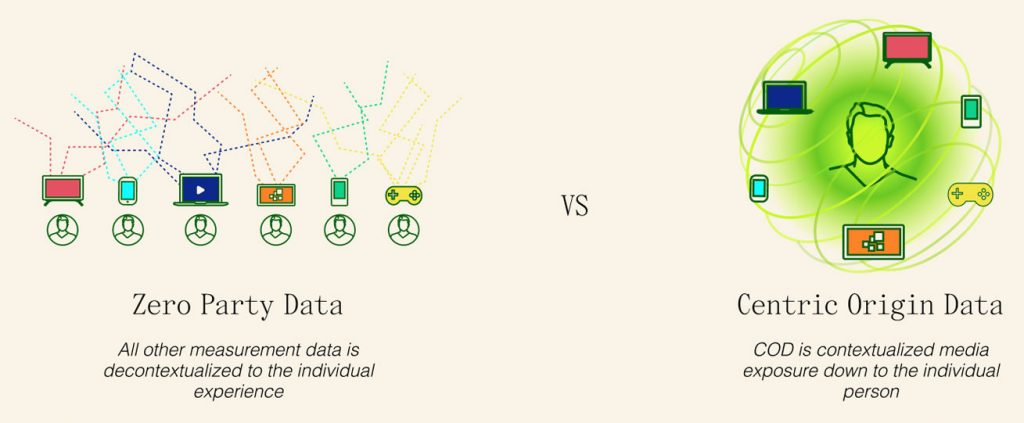
In theory, this data collection should be a good thing for consumers. The more these companies know about us, the better they should be able tailor our media experiences. But today, the data from each one of these different layers is collected from a separate party. Your Smart TV is collecting data on what apps you accessed, your cable Set Top Box is collecting data on what cable shows you watched, the streaming platform you are accessing is collecting data on what you did within their walls, your phone is collecting data on what you’re doing while you watch– the list goes on. I think here we need to explain that this is causing a de-contextualized understanding of individual behavior and what that means
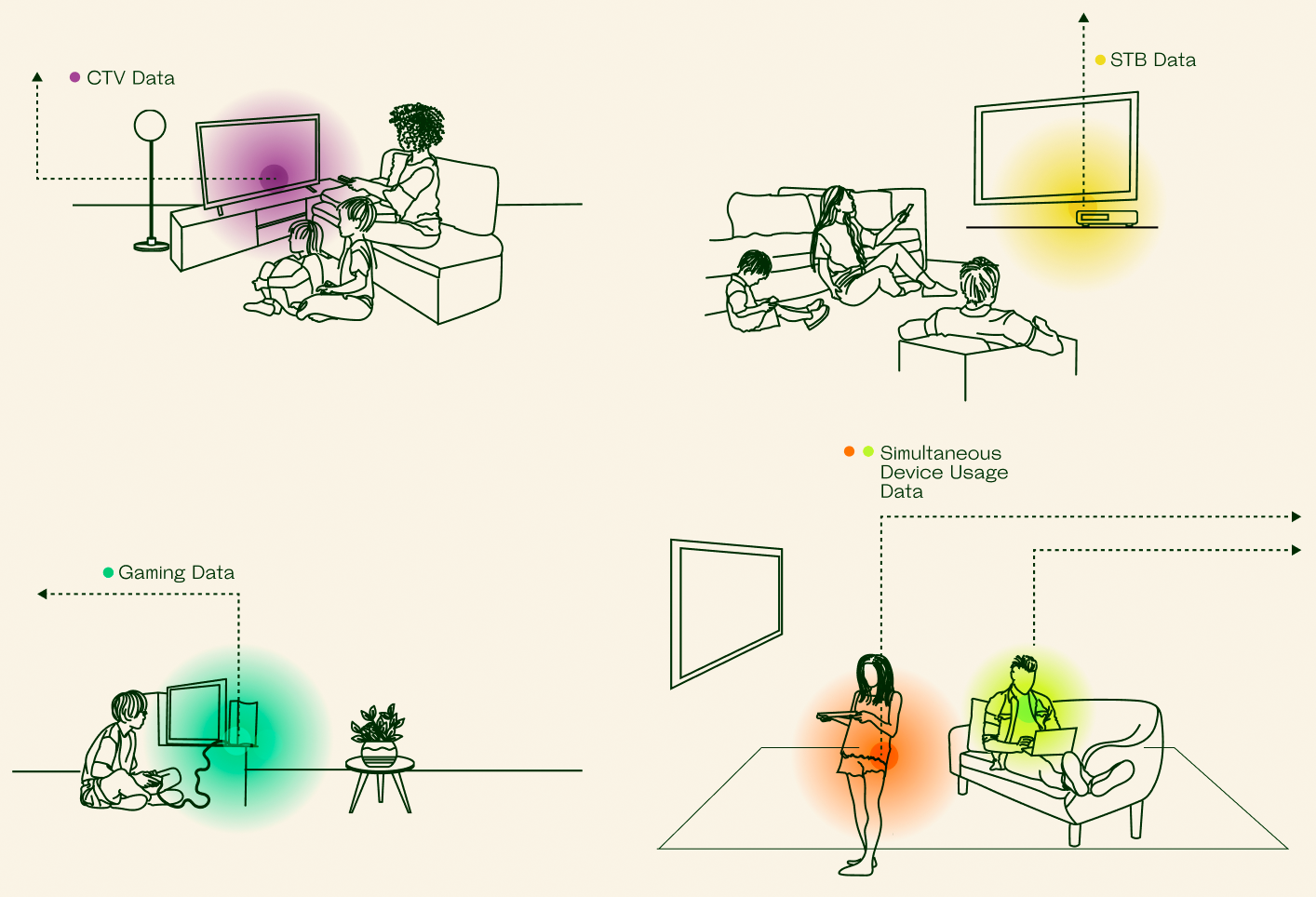
The way the data infrastructure is currently set up, all of these disparate data sources need to be aggregated together in order to stitch together an inference – a guess – of what the holistic media experience could look like for a given individual or group. In other words, when you are pulling together data from Smart TVs, Set Top Boxes, individual streaming platforms, and other third party big data sources, you are only capable of getting a hypothesis of what is really happening in that one viewing experience. That stitched-together hypothesis can’t explain the context in which it was collected, which means that companies using this data to produce media experiences for consumers are missing critical pieces of information.
That is, until now.
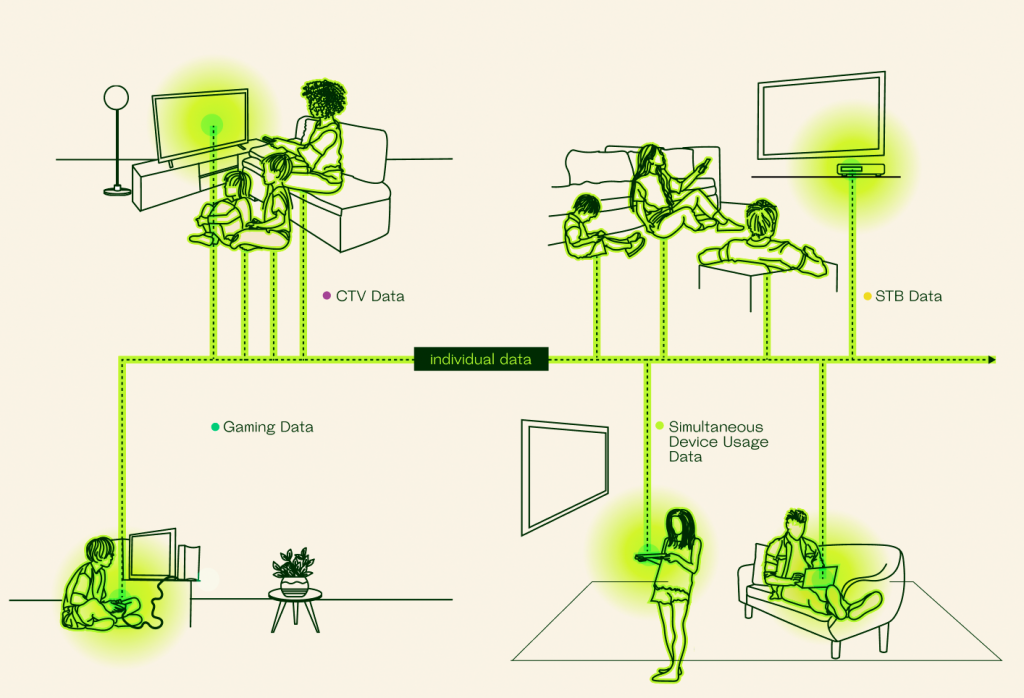
Hypha’s Centric Origin Data precisely captures the entire viewing experience– everything from what is being watched, how it is being watched, to the unique individual watching, and any simultaneous device usage that occurs in a single data stream in real-time. Because Hypha’s Centric Origin Data captures a holistic picture of consumer behavior across screens, channels, and platforms, it has the context that the hypotheses and guesses lack.
This level of single-source capability has never been achieved before. Our cutting edge tech and comprehensive panel methodology enables us to measure every single component of the modern media experience down to the exact individual within the home to provide the only unified individual media metric. This unified individual media metric – a media metric representing the entirety of the media experience for TV, omnichannel, and cross-device for a given person – allows for a contextualized understanding of their media consumption behaviors.
Access to this data will enable stakeholders across the media ecosystem to finally understand consumer media experiences holistically. Media owners and content providers can see how their content is being brought into the consumers’ lives– not to mention what other media they are engaging with simultaneously or what they are consuming on their competitors’ platforms. Marketers will be able to understand exactly who is seeing their ads and product placements, where they are, and in what context, beyond the household level. And the entire industry will be able to see across walled gardens across devices for the first time in the history of media.
Centric Origin Data will empower a wider state of equilibrium across the media landscape by giving the marketplace the granular, individual level data required to restabilize comprehensive targeting, activation, and measurement efforts. Content will find its way to the right people at the right time. With advertisements valued at the appropriate price for the specific individual consumers they are meant to reach, these higher prices will result in higher returns on investment with fewer impressions wasted on irrelevant, overexposed or past the point of purchase consumers.
And on a macro level, the better understanding of consumer media experiences that Centric Origin Data enables will help media continue to serve its purpose: to foster a more informed and engaged society, with information distributed quickly and equitably.